Monday, 27 January 2014

Events for Natural England

As part of Natural England's Upland Delivery Review, I have been asked to run four events, from Northumberland to Dartmoor, during March 2014.

The events will follow a talk & walk format that will include a scene-setting, indoor session followed by a visit to an area of moorland to discuss the issues in a practical setting.  The aim will be to give people a chance to hear about the thoughts emerging from the review and to provide Natural England with some feedback about the changes that are proposed in their dealings with upland stakeholders.

I am delighted to be doing this, and I will be bringing some independent, Heather Trust thinking to the events to make sure that there is a lively debate around all the issues.  The first events will be starting in March and attendance will be by invitation, but by all means let me know if you would like to be involved.

Links to Chartered Surveyors

I have been trying to establish better links to the firms of surveyors who act for many of the Trust's members. After all I am a chartered surveyor, and I would like to think that I can communicate in terms that would be of interest to my professional colleagues.

Some firms have HT members within their ranks but I suspect that many are not aware of our activities. I believe there is scope for mutual benefit from them knowing more about the Trust's activities and I have offered briefings to staff about the relevant work we are involved with and the hope is that these firms may be able to reciprocate by spreading the word about the Trust to their clients.

If this type of exchange of information would be of any interest to anyone stumbling across this blog, please let me know, by adding a comment to this post.

Scotland's Moorland Forum - action in Jan 2014


I have been active on behalf of Scotland's Moorland Forum in the first few weeks of 2014, and highlights of this activity have been recorded on the Forum's blog.

Activity includes the review of the Muirburn Code, a report for Forest Enterprise, and a meeting with Bob McIntosh, Director Environment & Forestry for the Scottish Government.

Defra Upland Stakeholder Forum

I attended a meeting of the Defra Upland Stakeholder Forum (USF) in London, on 9 January.  This was the last meeting under the current Chairman, Robin Mortimer, who established this Forum; he is leaving Defra and it remains to be seen what direction the Forum will take under his successor.

In the 18 months since its formation, the main role of the USF has been to provide input into the Upland Delivery Review carried out by Natural England.  This has been a bureaucratic process but the end is in sight, and hopefully the USF has helped Natural England deliver some notable improvements to the way they operate with 'stakeholders'.

The proof of the pudding will be in the eating, and the Trust is running four 'stakeholder engagement events' in different part of the English Uplands to test the emerging ideas in practical settings.  I will provide an update separately as this work progresses.


A start to 2014 and the Country Market & Sporting Sale

The year started slowly, as might be predicted, but this should not fool anyone. There is a lot to organise ahead of what I expect to be a busy year for the Trust on all fronts and every moment is precious if 2014 is not to get away from us.

Country Market & Sporting Sale

Our first priority from the start of the year has been, and continues to be, working up the 2014 Country Market & Sporting Sale, and this year, as ever, we are introducing some refinements.  We have found a key Lot that will be linked to a prize draw and we will be announcing details about this soon.  We will promote the Lot as part of our PR coverage for the Sale and in doing so hopefully attract some new bidders and bring some benefit to the donor's business.

We are always open for new offers of Lots, large or small, traditional or original.  We are only limited by your imagination!  The Sale website will go live on Thursday, 17 april and it will close at 12 noon on Friday, 2 May.


Wednesday, 8 January 2014

Land Use Strategy - Scottish Borders Pilot


There are two pilots to test the application of the Land Use Strategy and these are taking place in the Scottish Borders and in Aberdeenshire. The Moorland Forum is keeping in touch with both of them.  for details of a series of public meetings that are  being organised in January and February, see the Scottish Moorland Forum's blog.

Friday, 20 December 2013

Implementation of CAP announced

Defra has announced details of the CAP review in England and the amount of money that is to be transferred from Pillar 1 to Pillar 2. Initially, this has been restricted to 12% rather than the 15% that had been muted.

The understandable aim has been to ensure that the income to farmers from single farm payment is secure and that less depends on applications for environmental grant funding.  The shift towards to Pillar 2 will continue and with it will come the greater control over the environmental benefits that public funding will deliver.  There is a logic to this, but I am wary of it being taken to extremes that will stifle farming's entrepreneurial skills.  The ideal to my mind is knowledgeable farmers who have the enthusiasm and funds to apply their skills to the management of their land.  The old cry of 'it is difficult to be green when you are in the red' still rings very true.  Local, well-motivated people are always going to achieve more than broad brush control from a distant office.  Perhaps we need to focus more effort on explaining to our farmers and the other managers of land what is required and why.

The Defra website has no shortage of additional information.

Farmland birds need YOU to show they count

The Game & Wildlife Conservation Trust is urging all farmers and gamekeepers to take part in the first annual Big Farmland Bird Count. 

The organisation wants to determine how the UK’s farmland bird species are faring and to highlight the success of the conservation practices that farmers and gamekeepers putting in place.


The GWCT website has more detail.

Thursday, 19 December 2013

Scotland’s Soils website launched

See the article on the SG website, and the Soils Website.

I believe that we do not take enough account of what is under our feet and the effect it has on drainage, surface vegetation and productive capacity.  

If you are like me, a knowledge of soils will not have been included in your education and I hope that this site will provide us with a useful resource.

With the increasing interest in peatland, we are getting better at thinking about some of the issues, but we need to transfer this interest to all the other soil types.

Monday, 16 December 2013

Bog restoration in Wales

Photo: Wales online
The National Trust, with funding from Natural Resources Wales, is working to restore the large Migneint upland bog on the Gwynedd-Conwy border.

For more details see the WalesOnline article.

Monday, 9 December 2013

Back to the Blog

This Blog has once again been going through a quiet phase but I am going to try to boost the output for the benefit of Heather Trust supporters.  This reduced output is not the result of lack of activity within the Trust - just the opposite.  When the pressure is on, it becomes harder to justify the time taken to keep the Blog up to date.

I am going to link at least some of these blog articles to the Trust's newsletters - see the latest edition here.  On a monthly or more frequent basis, the newsletters will contain a thumbnail view of our activities and other issues, and these thumbnails will link to articles on this Blog, and elsewhere, to provide more detail for those who want it.

As ever, the aim is to provide filtered information that will be of interest to Heather Trust supporters.  I will be aiming to avoid regurgitating a vast quantity of information that might give the illusion of activity, but in reality is only adding to the amount of bumph that is in circulation.

Read on and feel free to comment.

Biodiversity Offsetting


Biodiversity Offsetting is a term that requires some clarification.  In my simple understanding, if biodiversity is to be lost or damaged by development, then the developers can enter into an agreement to achieve similar biodiversity gains on another block of land.

The Environment Bank is very active in this area and their latest newsletter provides some case studies that explain the principle rather better.

Tuesday, 3 December 2013

Wildfire Developments

There have been several developments relating to wildfire in recent months that I have been involved with.

Housing & Moorland
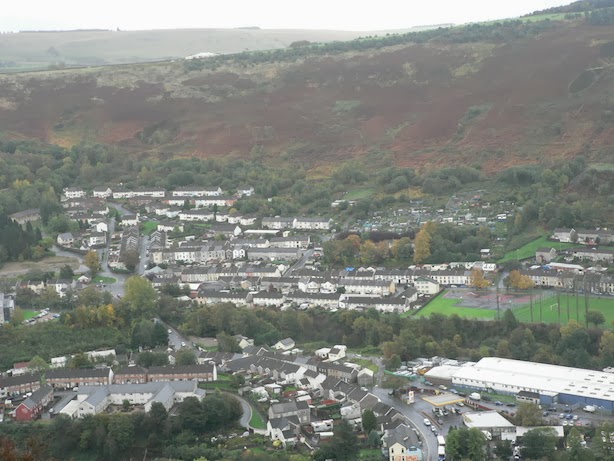
The Wildfire 2013 conference was held in Cardiff in October and this followed a familiar pattern. There was a wide range of presentations covering research everything from research through equipment to best practice. The South Wales Fire & Rescue Service hosted the meeting and organised the site visit. My memory of the site visit was the proximity of open hill ground to housing estates in the Welsh valleys to the north of Cardiff. It is no wonder that they have a significant wildfire problem.


The Wildfire Operational Guidance was launched by ACO Robert Scott the Chairman of the Scottish Wildfire Forum.  This was the culmination of an enormous amount of heard work Northumberland FRS who produced the guidance for the Scottish FRS.  The guidance is primarily aimed at the Fire & Rescue Services, but there is much good information in it for everyone.  It is likely to be adopted throughout the UK and it marks a significant step forward in raising our ability to manage wildfire and it is available to download from the Scottish Government website.

The Scottish wildfire Forum has been in the doldrums for a while, but the formation of the single Scottish Fire & Rescue Service on 1 April, this year has provided the catalyst to review the work of the Forum.  As a result of this, the Forum was relaunched on 21st September and is now building momentum.

Uppermost in many minds in Scotland will be the events of April 2013 and the spate of wildfires that affected the north-west of Scotland.  Discussions are being held about how the warning system can be improved so that periods of high fire risk can be identified in advance.  Such a system would have a double benefit: it would allow warnings to be issued to the owners and managers of land in advance, and it would also allow the FRS to make preparations by moving manpower and equipment into high risk areas.  A Fire Danger Rating (FDR) system is envisaged and the Met Office is involved in developing proposals.

As Vice-Chairman of the England & Wales Wildfire Forum I have been involved in the discussions of the FDR and also developing stronger links to government in England and Wales so that they have a better understanding of the risk posed by wildfire and the capability of the wildfire forum to assist in raising awareness and developing the best techniques for reducing the risk of damage from wildfire.

Friday, 15 November 2013

Report Update: The Economic and Environmental Impact of Sporting Shooting

Public and Corporate Economic Consultants (PACEC) have been commissioned to update and expand on their 2006 study ‘The Economic and Environmental Impact of Sporting Shooting’.

The 2006 report was prepared by PACEC on behalf of The British Association for Shooting and Conservation, Country Land and Business Association, and Countryside Alliance and in association with Game Conservancy Trust, and it has been decided that is time to refresh the data.  In 2006, game shooting was worth £1.6 billion to the UK economy and it is thought that this has increased since then as have the tourism, business, conservation and biodiversity benefits associated with the shooting industry.

This report has provided some invaluable information and I am delighted that it is to be updated.  It is a cause well worth supporting.  A key part of the review process will be the survey questionnaire that will be sent to the membership of all those organisations that are supporting it.

Sunday, 20 October 2013

Beavers are bracken control activists

A video clip taken by the Scottish Beaver Trial, earlier this year, demonstrates that Trude the beaver has been helping out the bracken control programme in Scotland.  I always suggest that there is no right or wrong way to control bracken but the choice of available techniques has just got slightly larger.  Go Trude!

Wednesday, 25 September 2013

Plants are key to peatland carbon sinks

The report in Eco-Business summarises the study carried out by researchers at Lancaster University that has been published in the journal Ecology Letters.  The study highlights the influence of vegetation on the amount of CO2 that is absorbed from the atmosphere.

Interestingly, if climate change increases the temperature, heather is thing to have not grass, as heather absorbs more CO2.

Friday, 20 September 2013

High Peak Moors - 50-year restoration plan


The National Trust has announced a 50-year programme of restoration for the High Peak moors.  See the BBC News report for more detail.

It is great to see the problems facing our peatland being grasped in this way.  As Patrick Begg comments in the BBC's report, it is no good scratching at the surface of this problem.  The ecology of our uplands, and peatland in particular, is slow to respond to management change.  If we want to achieve a given objective we need to agree what we want and then maintain a consistent approach over a period of many years and decades to achieve it.  A succession of 3-year initiatives will not achieve this.

The ability of estate managers to deliver continuity of management over periods that are measured in generations, or even in perpetuity in the case of the National Trust, is an essential component of planning for the future of the uplands.  This explains my wish to see better engagement of the land management community within the peatland debate.  See yesterday's output.

The leadership being shown by this project will help.  Well done the National Trust!

Thursday, 19 September 2013

Peatland

Peat harvesting in Ireland
I spent much of last week in York at the conference "Investing in Peatlands: Partnership for a New Peatland Era" that was very well run by the IUCN UK Peatland Programme.  Congratulations to Clifton Bain, who was very ably assisted by Rea Cris.

One of the highlights was the launch of the Peatland Carbon Code by Richard Benyon, MP, the Defra Minister, who demonstrated that there is very clear support within Defra for the development of peatland management and restoration.  In his presentation, he even slipped in a reference to the work of The Heather Trust -  what a nice man!

The amount of momentum that is developing behind peatland management and restoration is impressive, and it is clear that our knowledge is increasing in leaps and bounds as a result of all the research that is taking place.  The overarching message is that looking after peatland better is essential.  In "international speak" we need to refer to peatland restoration, but in my mind a lot could be achieved by raising awareness of the value of our peatland asset and providing guidance about how to manage it appropriately.  If ways can be found to provide an additional income stream to land owners and managers to pay for the management work, something positive would happen. This is where I hope that the Peatland Carbon Code will come in.

In the meantime, my one concern from the conference, last week was the lack of engagement by landowners and managers.  An enormous amount of effort is going into researching peatland issues,  but  management improvements and restoration work are largely restricted to conservation bodies.  I believe that we need to be making greater effort to link to all landowners and managers of peatland. if these people can be motivated will start to make a difference.  At present, I feel that we are just nibbling round the edges of the problem.

The Heather Trust stands ready to help, but to do more than fire out blog posts, we need some funding.  In the meantime, one can only read with incredulity the reports coming out of the Republic of Ireland about the amount of peat that has been harvested by Bord na Mona to feed into their power stations.  On this side of the Irish Sea we are making every effort to salvage every last bit of peat, while across the water they are harvesting it by the shed load to convert into carbon dioxide.

The Irish approach to peatland management?

Bracken Control season moving towards a close

Photo: Wharfedale Observer
Under the terms of the Emergency Authorisation for the use of Asulam for bracken control, we passed the first expiry date on 16 September.  As a result of this, it is now no longer legal to sell, distribute or transfer asulam, but application can continue.  However, as bracken dies back, the effectiveness of application will reduce and application is not recommended if a significant portion of the leaves have started to turn yellow.  At this stage, the pathways to transfer the chemical to the rhizomes start to collapse.  The translocation of asulam into the rhizomes is the aim  of the exercise.

Users now have until the end of October to apply their stocks of asulam to bracken or if containers are unopened, they can be returned to suppliers.

It was good to see that Ilkley Moor is taking full advantage of the availability of asulam as shown in the article in The Wharfedale Observer.  It is a very positive sign that we have been able to secure the Emergency Authorisation for 2014 already, and I hope that this will allow plans to continue existing bracken control programmes to be drawn up early and also provide enough confidence for new programmes to be started.

Friday, 13 September 2013

Glastonbury founder backs FG's sky lantern campaign

See the article in the Farmer's Guardian.

I hope that this high profile support for a ban on sky lanterns means that we are making progress towards solving this problem and reducing the threat to stock and the chances of starting wildfires.