Saturday, 31 August 2013

The Heather Trust in Pickering ~ 2nd October 2013


This last week has included a visit to Pickering, to set up for the AGM and the associated discussion meeting, that we are organising for 2nd October.  

The venue for the meeting is the White Swan Inn, at Pickering, which justifies attending the meeting on its own.  

The morning session will be a discussion meeting and a topic we will be focusing on will be the comparison between cutting and burning for managing heather.  It is an issue that has come to the fore recently and this year we are investigating whether enough use is made of cutting as an adjunct to burning.  There are those who swear that cutting or burning is the only way to manage heather, but I think there is a strong argument in favour of using the two techniques in conjunction.  Cutting can be used to develop a small scale mosaic of heather and this can have benefits for grouse.
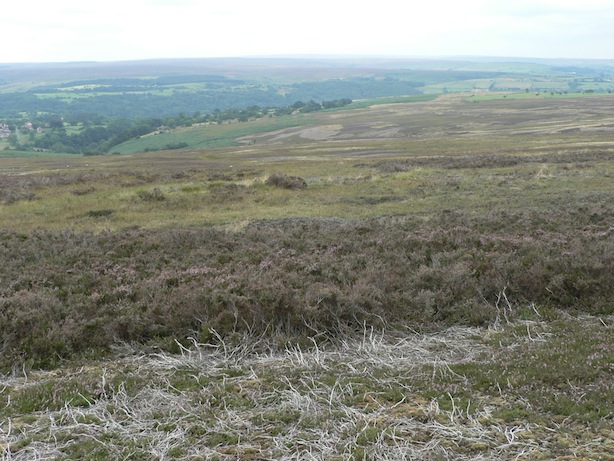
In the afternoon, we will be visiting Goathland Moor and this promises to be an excellent visit as in adition to excellent examples of cutting and burning, the moor offers a little bit of everything: from grouse, through heather beetle, to the construction of ponds.  We will be circulating invitations, this coming week to people who are in range that we think might be interested in this gathering, but if anyone would like to pre-empt this, please let us know.

The AGM will take place back at the White Swan Inn after a well-earned cup of tea and the day's activities will conclude with a Board meeting.  There will be no shortage of entertainment, but it will be a good opportunity for the Trust to 'strut its stuff' in an area where we have not held our AGM before.

Saturday, 24 August 2013

'No Silent Spring' in The Scotsman 24 August

The Scotsman picked up my letter to them that reflected my support for Adam Smith's article in the paper on 20 August.  See yesterday's Blog post.

Friday, 23 August 2013

Grouse moors can help diversity and the economy

Adam Smith is Director Scotland for Game & Wildlife Conservation Trust but he is also a Board Member of The Heather Trust.  He has been punching his weight in the pages of The Scotsman and I recommend his article to anyone with an interest in the management of our moorland and upland areas.

I support and endorse his views completely, which are at the core of The Heather Trust.

Balanced management of our moorlands and uplands is essential if we are to hold onto them as vibrant dynamic areas of the country that support society (through their natural (ecosystem) services), maintain their unique ranges of habitats and species, continue to underpin many cultural activities,  provide an income that supports the people and communities that live in these areas that in turn maintain the features that make these areas so attractive for visitors.  It is a complicated list of inter-related features and activities but, as Adam has pointed out, if we allow these areas to unravel, as has happened in parts of the UK, we are left with impoverished land that is denuded of all the features that make the areas so special.

It is far from being all bad news and there are many areas where sensitive management is delivering all the benefits I have outlined, but even in these exemplar areas there is room for improvement.  Adam has singled out Wales as a case study where it has gone wrong and I share his concerns.  This was why I was pleased to have been invited to contribute to an embryonic Moorland Initiative that the CLA is leading in Wales that is promoting the benefits that CLA members could bring to the uplands in Wales if they are given encouragement.  It is an issue that I will be pleased to support in an effort to reverse the decline of the Welsh moorlands and move away from the 'silent spring' state.

Grouse shooting is not for everyone, and it is not appropriate in all moorland areas, but where it does work it provides a focus for income generation and input that acts as a catalyst for activity that spins off to provide much wider benefits to the local area and to the habitats and species that live in these areas.

Monday, 19 August 2013

England: Defra unveils plans to move CAP money 'uphill'


See the article in today's Farmers Guardian.

Look for the comments about:

  • The retention of the three-region system: 
    • Lowland areas (i.e. land outside severely disadvantaged areas) 
    • Severely disadvantaged areas, and
    • Moorland
  • The shift of funding away from the lowland areas into the other uphill areas; and
  • The increase in the minimum claim size to 5 ha.
It would be boring if it was simple!

IUCN UK Peatland Programme - Conference

Investing in Peatlands: 
Partnership for a New Era
10th – 12th September 2013, York

We're pleased to annouce that our Key Note speaker will be Ian Dickie from Aldersgate Group.
If you haven't register yet, do so now! 
The latest 'Investing in Peatlands' Conference organised by the IUCN UK National Committee Peatland Programme is set for 10th -12th September 2013 at York University.
The fourth in the series of conferences, this year's theme is 'Partnership for a New Peatland Era' and will explore how the conservation, government and business sectors come together to meet the challenge of restoring a million hectares of peatlands through partnership approaches. The conference will highlight examples of good practice, identify barriers that still need to be broken down and highlight opportunities for taking forward partnership action both in the UK and internationally.
--------------------------------------
For more up-to-date information about the conference programme please visit our website
http://www.iucn-uk-peatlandprogramme.org/news/230
To register for this event please click herehttp://tinyurl.com/pkobve3

Standard registration closing August 27th 2013
IF YOU WISH TO PAY BY INVOICE PLEASE NOTE THE DEADLINE FOR THIS IN MONDAY 19TH OF AUGUST, after this date you will have to register by credit card - Please get in touch for more details. 
--------------------------------------
Poster session: Research and Partnerships for Peatland RestorationA poster session will run from 17:00 - 18:30 on 10th September on research and partnership for peatland restoration. To ensure high attendance and a relaxed atmosphere in which to connect with other delegates around your poster topic, a peatland themed guest beer will be provided at all delegates attending the session. Presenters are expected to be available to answer questions from delegates next to their posters for the duration of the poster session.
Submission: If you would like to present a poster, please submit your poster title when you register for the event. Posters will be screened for relevance (but will not be subject to a full review process). You should assume that your poster has been accepted for the event unless you are contacted to discuss concerns over relevance.

Thursday, 8 August 2013

Wildfire 2013 - Conference August Newsletter


To Book Your Delegate Place and Conference Dinner ...
... go to our website at www.ruraldevelopment.org.uk/wildfire where you will find full details about how to book online and the costs. You can pay quickly and easily via debit or credit card but if you require an invoice for payment please call 01765 609355 or e-mail the Wildfire Team at wildfire@ruraldevelopment.org.uk. Don't forget to add the conference dinner to your booking - it will a great networking opportunity and great value for money!


The Venue
Don't forget to book your accommodation at the Vale Hotel - preferential rates only apply to bookings made before Tuesday, 27th August 2013 - just quote "WILDFIRE 2013".
Wildfire 2013 is taking place at the Vale Resort, Hensol, near Cardiff on Tuesday 22nd and Wednesday 23rd October 2013. As well as being an excellent conference venue it offers some of the best leisure and golf facilities in Europe. Contact the Vale and quote 'Wildfire 2013' to secure a preferential room rate of £75.00 (ex VAT). This offer lasts until 27th August.

Exhibitors
Wildfire 2013 is shaping up to have the largest display of wildfire related equipment and services to date. From vehicles to clothing, weather instruments to pumps, all will be on show at Wildfire 2013. Exhibitors booked to date include:

Ballyclare Ltd

CFM Services

Delta Fire Ltd

Fire Fogging Systems Ltd

Flamepro (UK) Ltd

Godiva Ltd

Hunter Apparel Solutions & Texport

LHD Group (UK) Ltd

Openhouse Products Ltd

South Cave Unimog

Speedings Ltd

Terberg DTS UK

Land Management Adviser Vacancy - LL&TNPA


Loch Lomond & the Trossachs National Park Authority (what a mouthful of a name) is seeking a Land Management Adviser.

For details see the LL&TNPA (the acronym is not much better) website.

Monday, 5 August 2013

Wildfire Spanish style

And we think we have a problem with wildfire.  How's about this one in Spain?  Look at the resources that are deployed to tackle it - 550 firefighters backed by 17 water-carrying aircraft.

The threat to wildfire in this country is nothing like as extreme, at the moment, but that does not mean we should not be following the lead set by countries who have greater experience of wildfire: we need to plan and prepare for wildfire.  It is not 'if', it is 'when' it will happen.

Read more here: http://www.kentucky.com/2013/08/04/2749567/wildfire-rages-west-of-spains.html#storylink=cpy

Friday, 2 August 2013

New uplands academy offers support to next generation

I was pleased to learn about this new academy that aims to develop the next generation of upland farmers.  See the article in the Darlington & Stockton Times.

We need farmers to provide the management we all aspire to for the uplands. Without farming input upland habitats would quickly degenerate and all the infrastructure that we take for granted, walls/ dykes, paths, fences, gates would disappear.  To provide emphasis on the important role that stock have in shaping our uplands, I am fond of saying that the ultimate manager of moorland usually goes 'baa' or 'moo'.

The article includes a quote from Julia Aglionby, Director of the National Centre for the Uplands.  We are supporting the work of the Centre and the Trust's Annual Report, which will be published next week, includes an article about the Centre and a project (Better Outcomes for Upland Commons) that the Trust is contributing to.


Monday, 29 July 2013

Maintaining Ecosystems Services - its not just a nice thing to do....

Photo: 2020Vision
In explanation of the often vexed topic of the Ecosystem Services, 2020VISION's latest short film, commissioned by the Scottish Government for the Year of Natural Scotland, showcases Scotland's stunning wildlife and beautiful natural habitats.  The film introduces the concept of 'ecosystem thinking' and why we need to work together on a larger scale to protect Scotland's nature.  

Inspiring photography and video may lightly sugar-coat the topic, but the message is real.  We need to work on a larger scale and must include people.  "Great things can happen when people care."

Monday, 22 July 2013

Say no to Sky Lanterns

The Farmers Guardian has started a campaign to ban Sky Lanterns.  This follows the recent large fire in a recycling plant in the West Midlands.  This was reported to have been started by a sky lantern.  Numerous other incidents are mentioned in the Farmers Guardian article.

I think Defra has got this is one wrong and that it is time to reconsider the decision not to ban sky lanterns.  What do you think? 

The Farmers Guardian has established an e-petition so that you can add your weight to the demand for a ban.

Monday, 15 July 2013

Welsh Connections


The Trust has been rather quiet in Wales recently.  I regret this separation as I believe there are plenty of opportunities for the HT message to be beneficially applied in Wales, but as a result of two recent visits, I hope that this situation is about to change.

There has been a big upheaval in Wales with the establishment of a combined government agency called Natural Resources Wales (NRW) that has been formed from the Countryside Commission for Wales (CCW), and the Forestry Commission and the Environment Agency in Wales.  This new organisation will no doubt take time to bed down but it provides an opportunity to reconsider the support for the Welsh uplands.  I hope that this will prove to be a turning point for an integrated approach to moorland management in Wales.

In response to the formation of NRW, the Country Land & Business Association (CLA) in Wales called together a group of landowners to consider how an approach to the Welsh Government could best be made to highlight the importance and value of the Welsh uplands.  I was pleased to attend this meeting, and I have offered support for any work that develops from it.

I have been maintaining a watching brief as a member of Upland Ecosystems Group (UEG) in Wales, but it has been hard to justify attending meetings as there has been no opportunities to develop any involvement.  However, I was able to attend a meeting of the UEG, last week, and this was combined with a workshop for a new project being run by the RSPB called North Wales Moors Futurescapes; this seeks to consider landscape scale conservation management across a large area of the uplands that include Ruabon Moor, the Berwyn Mountains, and moorland at  Migneint and Hiraethog.  I have suggested that some 'old fashioned' demonstration events that I champion for the Trust could be beneficial to being people together to discuss the issues.

I hope that these initiatives will serve to re-establish the Trust's presence in Wales and allow us to provide some  input that will help to improve the management of the Welsh uplands.

Thursday, 11 July 2013

BBC News - Call to pay landowners to save peat

Photo: IUCN Peatland Programme

The article by Roger Harrabin published by the BBC yesterday is welcome for highlighting the importance of upland peatland as a store of carbon but his argument has gone astray in several places.

With other organisations I am working to promote peatland management, including restoration where appropriate, as an integral part of moorland management and to interpret the research for landowners. Many management and restoration schemes are in progress and many more are planned. Some of these are supported by public funds through agri-environment schemes, but others are being funded privately.

Defra is supporting a large amount of work to develop a system for trading carbon and this could provide some income to contribute to management and restoration costs.

The message is very positive. A diverse range of organisations, covering policy, research and land management, are working to develop structures that will lead to the improvement of the condition of our peatlands and place them at the centre of our management of the uplands, where they deserve to be. Issues remain to be resolved but with willingness on all sides these will be resolved.

Against this background of developing cooperation Roger Harrabin's article should be seen as an aberration. Perhaps he would like to publish a more accurate follow up story - there are plenty of people who would be willing to give him a rounded picture to work with.

For a more balanced view, see the article in today's Yorkshire Post.

Tuesday, 9 July 2013

Glastir worth £16m to Welsh upland farmers

See the article published by the Farmers Guardian.  This is positive news and I was interested to see that the Common Land Development Officers (CDOs) appear to be making a positive impact.  I have long argued that there is a role for some form of facilitator to bring people together in rural areas to help with grant applications and this is especially valuable on Common Land.

I am in Wales tomorrow for a meeting of the Upland Ecosystem Group followed by a meeting of the North Wales Moors Futurescapes project.  Glastir is bound to be central to much of the discussion and it will be interesting to find out if there are any lessons that can be exported to other parts of the UK.

Scottish Game Fair - a triumph!


Anne and Patrick and I attended the Game Fair at Scone, just north of Perth, last weekend, in support of the Game & Wildlife Conservation Trust and what an excellent three days it turned out to be.  After the debacle of last year's event, which was washed out at the end of the first day, this year was blessed with perfect conditions.

It was great to meet a large number of our members and supporters and to introduce new people to the need for moorland management.  We were focussing in particular on our work with heather beetle and bracken control, but got involved in discussion about all aspects of moorland management.

The attached photos provide a flavour of the action and show:
  • Paul Wheelhouse, MSP, Minister for Environment, visiting our stand on the Friday, 
  • Making the Golden Plover Award to Edinglassie Estate, Strathdon.  People in the photograph:
    • Malcolm Hay, Heather Trust Chairman 
    • Andrew Salvesen, Scottish Chairman GWCT
    • Charles Pearson, owner of Edinglassie Estate
    • Derek Calder, Headkeeper (who does all the work!)
    • Stuart Young, Estate Factor.
  • Patrick and me on the HT stand
  • HT mobile HQ - the tent and 'Kermit' the camper van. 

One of the highlights of the Fair was the presentation of the Golden Plover Award for Moorland Management to Edinglassie Estate, Strathdon, which was selected as a result of the estates excellent and innovative approach to moorland management over a period of many years.  Charles Pearson was presented with a print of a Golden Plover that had been provided by the artist Colin Woolf, from a painting he did specially for the award, which can be viewed on the Wildart website

We will be publishing more details about Edinglassie Estate in the Annual Report, next month.

This was the inaugural presentation of the Golden Plover Award, and we look forward to considering applications for next year's award, which will be made at next year's Game Fair.


Seen on the central display
outside the HT stand

Thursday, 4 July 2013

CLA Cymru Moorland Initiative


I was pleased to attend a meeting organised by the CLA in Wales last week, to lend support to their initiative that is considering how best to support upland managers across Wales.  With the recent formation of Natural Resources Wales (NRW) as a successor body to the Countryside Commission for Wales (CCW), in combination with the Forestry Commission and the Environment Agency in Wales, there is an opportunity for moor owners to develop new relationships with the Welsh Assembly Government and its agencies

In England and in Scotland, I believe that the role that landowners and land managers can play in helping the government agencies realise their ambitions for the uplands is now better understood and the relationship between the different organisations is improving, although there is always room for improvement.

In Wales, I believe that there is much more scope for improving relationships and perhaps there are lessons that can be learned from elsewhere.  From the views expressed at last week's meeting, there is little doubt that the previous arrangements for managing the Welsh uplands have not been a success and that under NRW the regime should be changed.  There may be some resistance to drawing on ideas from elsewhere,  but I would suggest that this should be very acceptable if it leads to faster improvements in the state of the moorlands and uplands in Wales.

I think back to my test when reviewing the condition of an upland area.  Stand on a high point and look around.  Ask the question, 'Is this how I would like it to be?'  If, as is all too often, the answer is no, the follow up questions must be, 'What needs to be done, who is going to do it and how is the work to be funded?'.  There needs to be a lot of mountain climbing in Wales to look at the views.

There will always be a shortage of funding and in simple pragmatic terms, if some landowners want to fund some management work that will improve the uplands with a view to one day shooting a few grouse, where is the sense in opposing this?  Every source of income needs to the exploited to the full.

I am pleased to be supporting this initiative and I wish it every success.

Wednesday, 3 July 2013

See you at the Scottish Game Fair?


I look forward to seeing as many members and supporters as possible at the Scottish Game Fair this weekend and we will be delighted to update you on our activities, past and present and we would welcome your input into our plans for the future.  Come and let us know what you think.

Tuesday, 2 July 2013

Sky Lanterns in action - fire at Smethwick

Photo: BBC News
BBC News is carrying a report of the fire at Smethwick in a large store of recycled plastic that is thought to have been ignited by a sky lantern.

The West Midlands may be a bit outside my usual parish, but the point here is that this incident shows that sky lanterns can act as an indiscriminate source of ignition.  On this occasion the fire has occurred in an urban area, it is not 'just' crops or rural lives that have been affected, the incident has occurred in a built-up area close to a centre of population.

Think of the cost of the fire fighting operation, the risk to firefighters and other people in the area, and the disruption that this fire is causing. Can this be justified by the 'wow factor' of sky lanterns drifting into the sky to wreak havoc somewhere downwind?

Although there is a risk of being branded as an 'I told you so' have a look at the blog post from 18 May 2013.

Defra's position is that a ban on sky lanterns is not under consideration.  Can this approach be justified in the light of this incident and the growing body of evidence about the damage that sky lanterns cause?

Heather Trust at the Scottish Game Fair

We will be supporting the Game & Wildlife Conservation Trust at the Scottish Game Fair, this year.  We will be on the GWCT stand in the centre of the action and look forward to meeting members, supporters and anyone who has an interest in our moorlands and uplands.

We will be happy to discuss any part of our work, but in particular we will be promoting the Heather Beetle Survey.  We will have a large map on display that will show all the reports of heather beetle damage  we have received recently.  We would be delighted to hear from anyone who has had an outbreak of heather beetle and even those who have not so that we could add some additional pins into the map during the Game Fair.

Anne, Patrick and I look forward to seeing you.

Friday, 28 June 2013

Donside estate wins new moorland management award

We have teamed up with the Game & Wildlife Conservation Trust to present The Golden Plover Award for Moorland Management, a new award which recognises progressive, innovative and environmentally sensitive moorland management.  The award will be presented to Edinglassie Estate, Donside at the Scottish Game Fair on Saturday, 6 July.  Edinglassie Estate wins this award in recognition of its consistent performance in all areas we considered and its continuing awareness of best practice and innovation. 

Artist, Colin Woolf, has kindly donated a framed special edition print with original pencil remarques to be presented to Edinglassie. The picture is an extract from this print of a commissioned watercolour portrait of a Golden Plover, which will be on display at the Scottish Game Fair.

The press release has quoted me as saying: 
“The aim is for a winner that is an example for others to follow. In making our choice, consideration was given to sporting and farming interests, the key traditional land uses, but critically included management for a range of other purposes, such as conservation and improvement of ecosystem services. A wide range of entrants were considered but Edinglassie rose to the top.” 

Adam Smith, Director Scotland, GWCT commented: 
“The concept of this award is to bring to the fore all the superb work being done to effectively and economically manage our heather moorland so it is a healthy and sustainable environment. Edinglassie is an ideal recipient and has long been regarded as a consistent and high achiever in moorland management. We hope this award will instil a healthy competition amongst Scotland’s moor owners.” 

The intention is that this becomes an annual award that will be open to land owners, estates, land managers, farmers, gamekeepers, sporting tenants, syndicates and any other individual or group with an interest in high quality moorland management and aims to encourage and promote good practice.